What we do behind the wheel speaks louder than what we say at home.
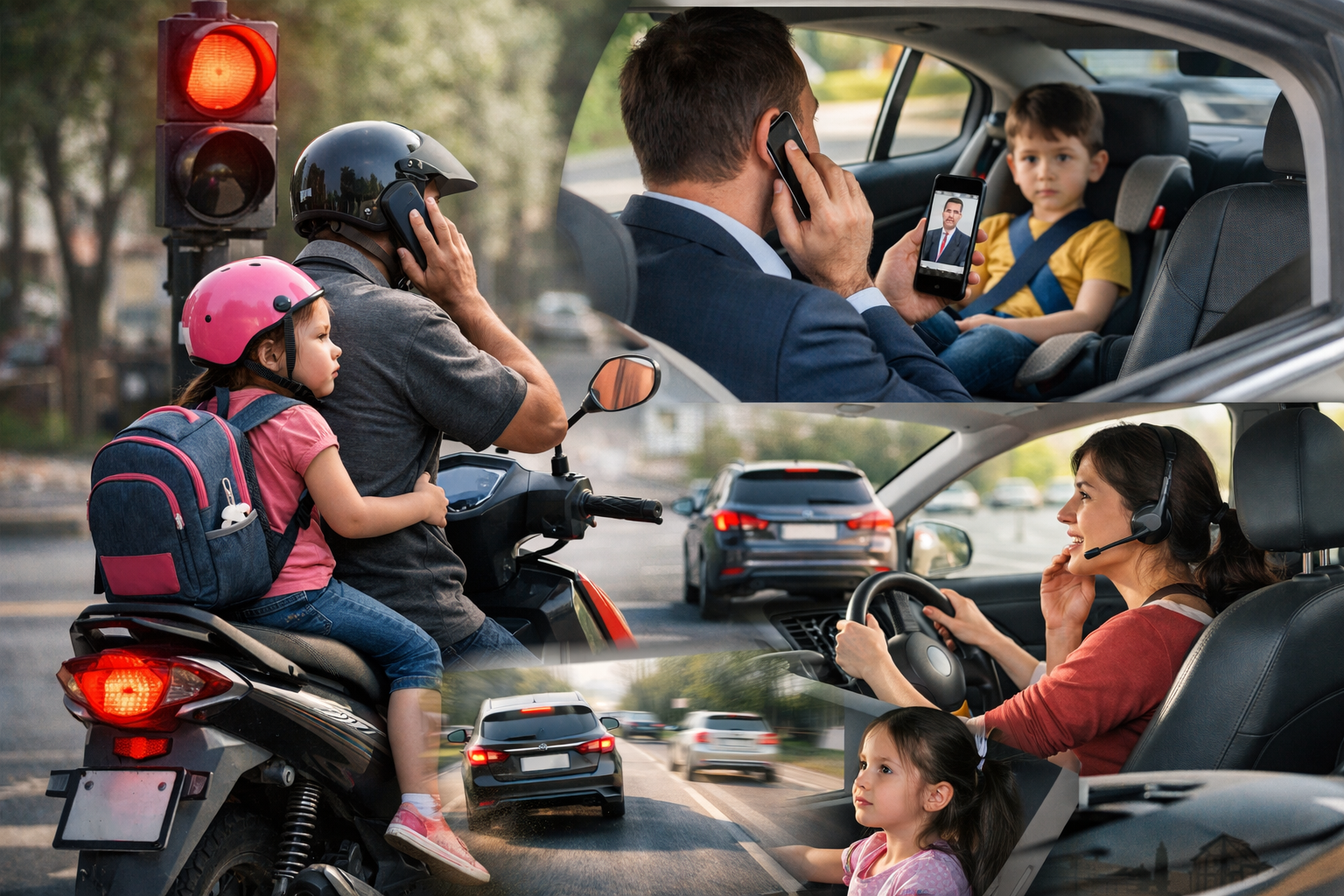
There's a moment we've all lived through. A red signal. The road is empty. No one is watching. The mind says, "Just go. It's fine."
And perhaps, sitting behind — in the back seat, on the pillion — is a child. Quiet. Observing. Absorbing.
That child doesn't hear the rule you taught at home. That child sees what you do when no one is watching. And that becomes the real lesson.
Discipline is not what we follow when others are looking. It is what we choose when we believe no one sees us — because someone always does.
The small things that aren't small
We often think of road rules as minor inconveniences. A helmet feels uncomfortable. A seatbelt seems unnecessary for short trips. The phone buzzes, and we glance — just for a second. The lane ahead is slow, so we weave through. A meeting is urgent, so we take the call while driving.
Each of these feels small. Harmless. "Everyone does it."
But within each of these moments lives a deeper question: What am I teaching myself about rules? About safety? About my own life?
And if there's a child watching — either beside you or through the stories you tell at home — they are learning something, too. Not from your words. From your choices.
Children don't learn rules. They learn patterns.
A child doesn't remember, "My parent told me to always wear a helmet." A child remembers, "My parent never wore one."
They notice when you slow down for a signal — and when you don't. They notice when you put the phone away — and when you don't. They notice whether you respect the road, other drivers, pedestrians, and yourself.
And over time, those observations become their inner compass. Not because they were told. But because they watched. Again and again.
What we repeat becomes what they inherit. Not wealth. Not words. But patterns.
When rules are followed only in front of others
There's a kind of discipline that appears only when someone is watching. The helmet goes on near the traffic police. The seatbelt clicks when a camera is ahead. The phone is put down when someone else is in the car.
This is not discipline. This is performance.
And children sense it. They learn that rules are not about respect or safety — but about avoiding consequences. And slowly, that thinking spreads. Into school. Into relationships. Into health. Into how they treat their own bodies.
If I follow rules only when punished for breaking them, what am I really teaching myself about self-respect?
Small violations, slow spillovers
A skipped signal doesn't stay on the road. It travels inward.
The same mind that says, "This rule doesn't apply to me right now," begins to say it elsewhere. With food. With sleep. With commitments. With money. With health.
Discipline is not a switch we turn on and off for different parts of life. It is a thread that runs through everything. When it weakens in one place, it quietly loosens in others.
The person who cannot pause at a red light may also struggle to pause before reacting in anger. The person who cannot put down the phone while driving may find it hard to put it down at dinner. The pattern is the same. Only the setting changes.
The connection to a long life
At YNot100, we often speak of 120-year living. Not as a dream. But as a design — a possibility written into our biology, waiting to be honored through how we live each day.
But longevity is not built on one grand decision. It is built on ten thousand small ones.
The decision to protect your body with a helmet. The decision to stay alert while driving. The decision to respect other lives on the road as much as your own. The decision to be the same person in private as you are in public.
Road discipline is not about traffic. It is about how we treat life itself — our own and others'. And those who live long, live with a certain rhythm of care. A rhythm that begins with the smallest acts of self-respect.
Living to 120 is not about luck. It is about consistency. And consistency is born from discipline — practiced not once, but always.
A quiet truth
You may never know what your child remembers from the thousands of car rides, bike trips, and walks you shared. But they remember something. Not the route. Not the destination. But how you moved through the world.
Did you rush? Did you cut corners? Did you respect the pause of a red light, even when no one was watching?
Or did you show them, silently, that some things are done simply because they are right — not because someone is checking?
A closing thought
True discipline is what we practice when no one is watching. Because children are always watching — directly or indirectly. Through our actions. Through our energy. Through the way we carry ourselves in the small moments.
And in those moments, we are not just driving a vehicle. We are shaping a mindset. Theirs. And ours.
Living longer starts with living consciously — one small decision at a time.
The next time you approach a signal, a helmet, a seatbelt, or a ringing phone — pause. Not because someone is watching. But because someone is learning.
And that someone might just be you.